Note: This page is the full text of Mercure Istanbul Bomonti’s 2026 Sustainability Report. The practices, results and targets it describes are the hotel’s own statements at the time the report was prepared; they are not an independent audit or certification. Editor’s notes are marked separately.
Sustainability and DefinitionsLink to this section
Sustainability: Activities carried out to meet today’s needs while protecting natural resources and leaving a good environment for future generations.
Sustainable Development: Planning the life and development of today and the future by striking a balance between people and nature, without depleting natural resources, in a way that allows future generations to meet their needs and to develop. It is a concept with social, ecological, economic, spatial and cultural dimensions.
As Mercure Istanbul Bomonti, we are aware of and committed to our responsibilities for sustainable tourism and development. We strive to leave a better world for future generations. Our corporate vision, mission, culture, values and ethical principles guide us as we fulfil these responsibilities.
At Mercure Istanbul Bomonti, informing our stakeholders transparently and effectively about our activities and their impacts is one of the matters to which we attach particular importance. The sustainability reports we publish for this purpose will be an important tool in our efforts to be a transparent and accountable organisation.
Within the scope of sustainability, our hotel’s core responsibilities are shaped around these key points:
- Creating and making use of opportunities for recycling and reuse
- Continuously improving energy efficiency and minimising the negative impact of carbon emissions
- Reducing every kind of environmental impact we cause
Our responsibilities are not limited to these, however. The social and economic factors that form the foundations of sustainability are at least as important as the environment. Sustainability covers a broad scope, from providing employees with the best possible conditions to sharing the value created with society.
Back to contentsHotel and Company InformationLink to this section
Hotel information given in the report
- Group name
- TULUKOĞLU TURİZM OTELCİLİK VE TİC. A.Ş.
- Hotel name
- Mercure Istanbul Bomonti
- Telephone
- 0(242) 824 81 88
Editor’s note: This number conflicts with +90 212 240 50 50, the number given in the hotel factsheet and on Accor’s hotel page. To reach the hotel, use +90 212 240 50 50.
- Website
- www.mercurebomonti.com
- reservation@mercurebomonti.com
- Address
- Ergenekon Caddesi No 62 A, Bomonti Şişli / Istanbul
- Category
- Not stated
- Season
- Open 12 months a year
- Location
- Osmanbey Train Station: 1 km, 5 minutes on foot
- Kabataş ferry pier: 5 km, 45 minutes on foot
- Dolmabahçe Palace: 4 km, 20 minutes on foot
- Cemal Reşit Rey Concert Hall: 3 km, 15 minutes on foot
Editor’s note: Distances and times are as written in the source document and have not been verified.
- Year opened
- 2023
- Nearest airport
- Istanbul Airport, 40 km
- Transport
- Public transport / car rental / airport transfer services
- Description
- Located in Bomonti, within walking distance of major shopping centres, gourmet restaurants and busy business districts, Mercure Istanbul Bomonti has a unique, innovative style and meets your expectations with a superior level of service. Its newly designed rooms combine comfort and technology seamlessly. By car, the hotel is 10 minutes from the Istanbul Congress Center, the Lütfi Kırdar Convention and Exhibition Center and the Bosphorus, and 20 minutes from Sultanahmet Square and the Historic Peninsula.
Message from the ManagementLink to this section
Dear Guests, Business Partners and Employees,
As Mercure Istanbul Bomonti, we are aware that sustainability work in tourism minimises negative impacts on the environment and on cultural heritage, and we are aware of the responsibilities that sustainable tourism brings. We strive to leave a better world for future generations. To this end, we continue our work on many topics within the concept of sustainability, such as reducing environmental impacts; energy, water and waste management; protecting cultural and social heritage; providing economic and social benefits to local people; and protecting the environment. In today’s world, where the importance of climate change and global warming is felt more every day, we aim to fulfil our share of the responsibility in the best possible way and strive to ensure that our employees embrace environmental awareness. By focusing on managing sustainability risks effectively and achieving sustainable growth through long-term strategies, we aim to increase our success day by day.
Back to contentsVision, Mission and ValuesLink to this section
Our VisionLink to this section
To be our guests’ first choice, guided by our corporate values and our approach to quality, and to sustain that position.
Our MissionLink to this section
In the sector we serve, to deserve the satisfaction and trust of our employees and customers by delivering results that meet expectations with the highest standard of quality.
Our ValuesLink to this section
- People First: People are the essence and the guarantee of what we do.
- Building Connections: We build sincere, lasting and respectful relationships.
- Sustainability: We invest in the future through the efficient use of our resources and environmental awareness.
- Reliability: We build trust at all times and with everyone.
- Openness and Transparency: We are accountable as an organisation at all times.
- Customer Focus: We aim for continuous improvement by evaluating all suggestions, requests and complaints from guests.
Our ObjectivesLink to this section
Target
- Starting to use biodegradable laundry bags
- Reducing waste from straws (optional use / paper or bamboo straws)
- Replacing the single-use toiletries in guest rooms with dispensers
- Continuing staff awareness activities and obtaining training from external providers
- Developing ways to share our sustainability work with stakeholders more effectively
- Compliance with international standards
- Preventing occupational accidents by properly meeting all work-related occupational safety requirements for our employees and subcontractors
- Continuing practices that increase energy efficiency in our hotel
- Continuing to buy appliances with reduced environmental impact and high energy efficiency
- Continuing the training on saving measures held each year to reduce energy consumption
- Continuing to develop projects to reduce energy consumption
- Converting all fluorescent, PLC and compact lighting in the hotel to LED lighting
Our PoliciesLink to this section
Mercure Istanbul Bomonti has adopted a sustainability policy covering environmental, social, cultural, economic, quality, human rights, health, safety, risk and crisis matters. As a hotel, we are committed to applying sustainability principles in every aspect of our operations. Our policy on each of these topics is set out below:
Environmental ResponsibilityLink to this section
- We encourage the efficient use of energy and water resources and aim to reduce the amount of waste.
- We minimise environmental impacts in order to protect the local ecosystem and support biodiversity.
- We raise awareness of recycling and waste management among our staff and guests.
Social and Cultural SensitivityLink to this section
- We support economic and social development by working together with local communities.
- We protect and promote local cultural values and heritage.
- We ensure that all our staff follow the principles of fair work practices, equality and diversity.
Economic SustainabilityLink to this section
- We encourage working with sustainable suppliers and aim to contribute to the local economy.
- We continuously review our processes to achieve efficiency and cost savings.
- We aim to adopt the best practices in our industry by seeking innovative solutions.
Quality ManagementLink to this section
- We adhere strictly to quality standards to keep guest satisfaction at the highest level.
- We are committed to improving the quality of our service on the basis of continuous improvement principles.
- We aim for excellence by investing in the continuous training and development of our staff.
Human Rights and Employee RightsLink to this section
- We comply fully with standards of business ethics and with human rights.
- We take the necessary measures to protect the health, safety and well-being of our employees.
- We support fair working conditions and reject all forms of discrimination.
Health and SafetyLink to this section
- We take the necessary measures to keep the health and safety of our guests and employees at the highest level.
- By carrying out emergency planning and drills regularly, we aim to respond effectively in crisis situations.
- We provide a safe environment by continuously reviewing our hygiene and cleaning standards.
Risk and Crisis ManagementLink to this section
- We assess risks, take precautions and continuously improve our management processes.
- We prepare and update crisis plans so that we can act quickly and effectively in a crisis.
- We run training and awareness programmes to prepare our staff for emergencies and strengthen their ability to respond.
This sustainability policy reflects our efforts, as Mercure Istanbul Bomonti, to achieve our sustainability goals and to fulfil our commitments for a better future. We continuously review and update our policy and share it with all our stakeholders.
Back to contentsOur EmployeesLink to this section
- Total employees
- 92 people
- Female employees
- 38 people
- Male employees
- 54 people
Employee numbers (no reference date is given in the source)
We provide employment for local people, and 57% of our employees live in Istanbul.
Back to contentsBenefits for Our StaffLink to this section
- Name badges and lockers: Staff are given a name badge when they start work and a locker in the changing room.
- Laundry: The work uniforms of all our employees are cleaned free of charge.
- Staff shuttle: A shuttle service based on shift times is provided for employees who do not live in staff accommodation.
- Staff canteen: The staff canteen is free of charge.
- Promotion celebrations: Staff promotions are announced, and the General Manager congratulates the colleagues concerned.
- Staff birthdays: Each month, the birthdays of staff born that month are celebrated.
- Special days: Small celebrations are held on certain special days of the year (International Women’s Day, New Year, the Ramadan and Sacrifice Feasts, etc.). Holiday greetings are exchanged and staff are offered cologne and chocolates.
- Employee of the Month: The person chosen as employee of the month receives a gift voucher and a certificate.
- Internships: Our hotel offers internships to high school and university students.
Staff Training and DrillsLink to this section
Management sets a monthly training target for each department manager, and training effectiveness measurements are checked and kept on file by Quality Management.
In line with our annual training programmes, our environmental consultant gives our employees Environmental Training at least once a year.
Our occupational health and safety (OHS) specialist prepares an annual training plan and submits it to management for approval. The aim is to carry out the approved plan in a controlled way during the year.
Planned statutory training is given by authorised organisations, so that employees receive certificates.
Through training given periodically by our environmental consultant, all our employees are made aware of environmental management.
Training and drills:
- Environmental training given by the environmental consultant
- Sustainable Tourism Programme awareness training given by the quality officer
- Basic occupational health and safety and fire training given by the OHS specialist
- Fire extinguishing drill
- Chemical handling training
- Food safety training
Training is delivered both internally and externally.
Back to contentsCommunication with Our StakeholdersLink to this section
Effective, two-way communication with stakeholders is very important. We work to maintain transparent communication by setting different communication methods for different stakeholder groups.
We shape our sustainability strategy and work around our stakeholders’ views, and use effective communication methods in line with the suggestions and ideas of different stakeholder groups.
By working in cooperation with stakeholders, we contribute to the development of our sector.
| Communication method | Frequency |
|---|---|
| Employees (Stakeholder group) | |
| One-to-one meetings | Continuous |
| Training | As part of the annual training plan |
| Events | When needed |
| OHS committee meetings | Once a month |
| Website | Continuous |
| Guests (Stakeholder group) | |
| Guest satisfaction surveys | Continuous |
| Social media | Continuous |
| Website | Continuous |
| Suppliers (Stakeholder group) | |
| Supplier evaluation activities | Once a year |
| Meetings | On request |
| Continuous | |
| Public institutions (Stakeholder group) | |
| Published regulations and circulars | At least 5 times a year |
| Website | Continuous |
| One-to-one meetings | Once a month |
| Inspections by public institutions | Once a month |
| Industry groups (Stakeholder group) | |
| Meetings | At all times |
| Seminars and trade fairs | Several times a year |
| Universities (Stakeholder group) | |
| Internship programme | Continuous |
| Attending conferences and meetings | Whenever they are held |
| Press (Stakeholder group) | |
| Interviews | When needed |
| Press releases | When needed |
Responsible PurchasingLink to this section
When purchasing, sourcing raw materials and procuring other goods and services, we at Mercure Istanbul Bomonti aim to obtain all the goods and services our business needs on time, at suitable prices and payment terms, and at the highest possible quality.
Within the requirements of the Quality Management System we apply, we encourage our suppliers to grow and develop with us.
When buying materials, we give priority to products in environmentally friendly packaging.
We take care to choose environmentally responsible companies as suppliers. In selecting suppliers, our preference is for 14001 Environmental Management System certification / FSC-labelled products, and for our food suppliers to hold ISO 22000 Food Safety Management System certification. We prefer to work with local companies by buying from as close by as possible. This aims to reduce environmental impacts by minimising the CO2 emissions of suppliers’ delivery vehicles, and we support people working in the region.
Provided it meets our purchasing criteria, we accept the product as a priority. We evaluate our suppliers on site at regular intervals. When buying appliances that consume energy, we prefer products in the A+++ class.
Back to contentsAccessibility PracticesLink to this section
At our hotel, access and information for everyone with special needs are provided in accordance with the Regulation on the Qualifications of Tourism Facilities (“Turizm Tesislerinin Niteliklerine İlişkin Yönetmelik”).
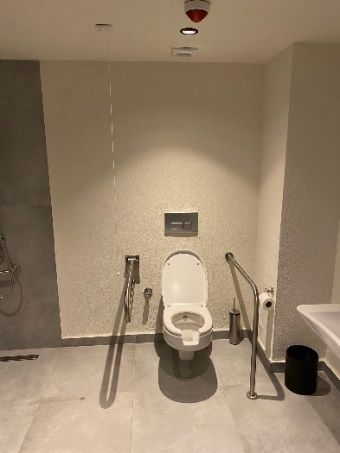
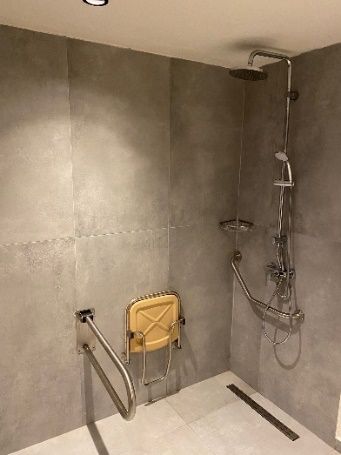
- The hotel entrance has an automatic door for wheelchair and mobility-device users. Step-free entrance and exit doors can also be used on request.
- A spare wheelchair is kept ready at reception in case it is needed.
- Our hotel has 1 room designed for disabled guests, and accessible WCs for disabled people in the public areas.
Waste ManagementLink to this section
In the Waste Management System we apply at Mercure Istanbul Bomonti, our primary aim is to reduce the amount of waste, to manage the waste we generate well so that it is disposed of with the least harm to the environment, and to recover whatever can be recovered.
Recyclable WasteLink to this section
We carry out various activities to reduce our waste at source, and we encourage our guests and employees to take part in the recycling programme. As part of the zero-waste project, we separate waste by colour code. Our staff receive training on waste separation.
- In our temporary non-hazardous waste storage area, plastic, paper and cardboard, metal, glass, organic and grass waste are stacked separately; the waste is then handed over to a licensed company for disposal so that it can be recycled.
- Packaging waste has been reduced by buying products in large boxes and tubs instead of single-use items wherever possible.
- Water dispensers in staff areas reduce the use of single-use water.
- Packaging waste is avoided by buying breakfast products in large boxes and tubs instead of single-use portions wherever possible.
- Refillable soap dispensers are used in the public toilets and in staff hand basins and toilets.
- To reduce paper consumption, we send our correspondence and announcements by email wherever possible.
- Department managers can access all documents issued within the business digitally.
- Instructions, procedures, memoranda, internal correspondence and updates are announced to departments by email.
- Records that can be tracked electronically are not printed, and both internal and external training will continue to be given to raise staff awareness.
- The hotel’s public areas have “waste separation bins” so that waste can be separated at source.
- In our rooms, organic waste and packaging waste are separated.
- In food production and service areas, waste is separated at source by type.
Hazardous WasteLink to this section
- We ensure that hazardous waste generated at our facility is disposed of without harming the environment. The waste is kept in a temporary storage area and then disposed of by licensed companies.
- Our facility has a separate hazardous waste area. Our hazardous waste (pesticide containers, pressurised containers, chemical bottles, cables, batteries, fluorescent lamps, waste vegetable oils, paint and thinner cans, aerosols, etc.) is stored in accordance with the relevant legislation and laws.
- The vegetable oils we use for frying are changed after their free polar compound percentage has been measured with a polar compound test kit. Waste vegetable oil with a high polar compound value is stored temporarily in our hazardous waste area and then handed over to a licensed company for recycling.
The comparison of the distribution of hazardous and non-hazardous waste generated at our facility, relative to 2025, is as follows:
Editor’s note: In the source document, this sentence is followed only by the monthly paper waste chart below. The document contains no breakdown of hazardous and non-hazardous waste and no comparison with 2025.
| Month | kg |
|---|---|
| January | 700 |
| February | 600 |
| March | 550 |
| April | 1,200 |
| May | 850 |
| June | 900 |
| July | 1,460 |
| August | 1,800 |
| September | 1,450 |
Source: chart in the report: “Aylık Kağıt Atık Miktarı (kg)”
Water ConsumptionLink to this section
To reduce overall water consumption without compromising on health, hygiene or guest satisfaction, we use water-saving equipment; there are information leaflets on saving water in the guest rooms, and we train our employees on this subject.
| Month | m³ |
|---|---|
| January | 2,438 |
| February | 2,113 |
| March | 2,600 |
| April | 2,275 |
| May | 3,314 |
| June | 3,683 |
| July | 4,288 |
| August | 3,684 |
| September | 2,669 |
| October | 2,719 |
Editor’s note: Values are taken from the data labels on the source chart. On the source chart the axis values are mislabelled, and the March, May, September and October points are not plotted at the height of their own labels.
Source: chart in the report: “Aylık Su Tüketimi (m³)”
The following water-saving measures are in place at our hotel and are maintained:
- Aerators that reduce the flow rate have been fitted to taps and showers.
- Inverter water pumps in our water tanks, sensor taps, rain-style overhead showers, float systems that prevent overfilling and overflow in storage and balance tanks, differential pressure sensors, solenoid valves and check valves have been chosen.
- Toilets use water-saving and/or dual-flush cisterns.
- Photocell taps and sensor urinals are used in the toilets in guest rooms and public areas.
- Drip irrigation is used when watering our gardens.
- A recirculation line is in place and in active use in the rooms, the spa and the staff showers, so that no one has to wait for hot water and water is not wasted.
Work to reduce water consumptionLink to this section
Planned
- It is planned to achieve substantial savings by cleaning the aerators of all mixer taps and reducing the flow of those with a high flow rate. (148 rooms were done at the start of the season.)
- It is planned to inspect the plumbing system and install suitable pipes and valves in problem areas (investment project).
Energy ConsumptionLink to this section
We aim for all the electronic products we buy to be energy-efficient and for all our employees to be trained in saving energy.
The following energy-saving measures are in place at our hotel and are maintained:
- As a renewable-energy benefit for climate control, tempered window glass that reflects sunlight has been chosen for our guest rooms.
- To make the most of daylight, the façade of the lobby and public areas has been clad in glass.
- Guest rooms use systems that switch off heating and cooling units when a window is opened.
- Energy-saving bulbs or LED lights are used in our hotel.
- Sensors control the lighting in the toilets in common areas, in corridors, in staff areas and on the ground floors.
- Outdoor lighting is controlled by timers.
- Our rooms use electronic key cards.
- For appliances that consume energy, A+++ class products are preferred.
| Month | kWh |
|---|---|
| January 2026 | 132,420 |
| February 2026 | 104,090 |
| March 2026 | 108,625 |
| April 2026 | 99,911 |
| May 2026 | 101,288 |
| June 2026 | 116,405 |
| July 2026 | 144,820 |
| August 2026 | 157,776 |
| September 2026 | 126,122 |
| October 2026 | 117,772 |
Source: chart in the report: “Aylık Elektrik Tüketimi (kWh)”
- Heating and cooling units are positioned so as not to reduce energy efficiency.
- To make the most of daylight, the lobby restaurant and bar area has been fitted with floor-to-ceiling glazing.
- Heated air curtains are used at doors that open to the outside.
- Curtains in vacant rooms are kept closed during the summer months.
- To save energy, the minibars in our rooms are positioned away from heat sources.
- For guests who do not ask otherwise, we change the room linen every other day, reducing the electricity used for washing, drying and transport.
- We use frequency-controlled pumps.
| Month | m³ |
|---|---|
| January | 55,756.07 |
| February | 63,833.93 |
| March | 86,041.93 |
| April | 87,710.67 |
| May | 83,169.96 |
| June | 65,985.81 |
| July | 57,967.08 |
| August | 67,102.68 |
| September | 73,230.00 |
| October | 83,063.00 |
Source: chart in the report: “Aylık Doğalgaz Tüketimi (m³)”
Work to reduce energy consumptionLink to this section
Planned
- Maintenance of the natural gas pressure regulators for the boilers and in the kitchen area has been planned.
- Maintenance of our hot-water cylinders and heat exchanger systems is planned for the summer months.
- Our boilers are serviced, and an equal-ageing practice for them is in place and will be monitored.
- Kitchen staff will be informed of the operating instructions for gas-fired ovens.
Chemical ConsumptionLink to this section
Chemicals are substances we use in many areas of life; they make life easier, but their harmful effects can also have negative consequences. At our facility, chemicals are used in maintenance and repair work and in cleaning.
Cleaning with the environment in mind means being able to clean hygienically while having as little negative effect as possible on health and the environment. Harm to the environment can be minimised not only by using environmentally compatible cleaning products, but also by using them sparingly and dosing them correctly. In this way, the total harm that chemicals cause to the environment can be reduced significantly.
Our priority is that all the chemicals we use are approved, labelled and in suitable packaging, and that we have received their MSDS (Material Safety Data Sheets). The purchasing department trains the employee who will use a chemical on its use, the information in its MSDS, the quantities and methods of use, the personal protective equipment required, and the measures to be taken under the “Emergency Measures Instruction for Chemical Spills”.
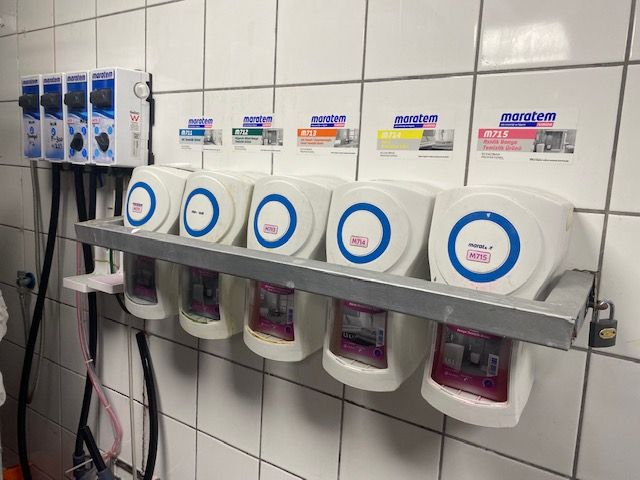
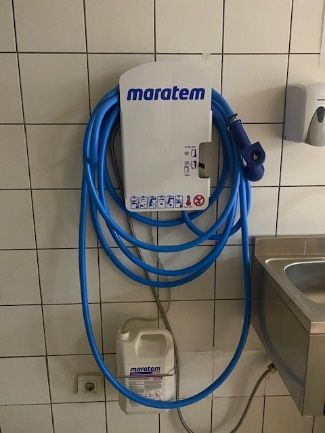
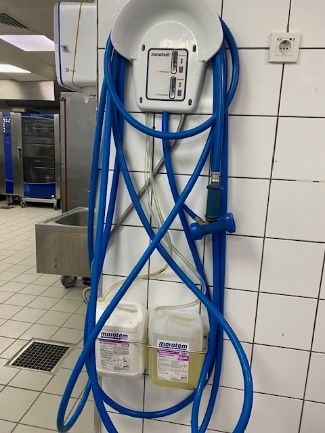
Our chemical stores have the necessary measures in place against leaks, spills and similar incidents that could harm the environment. Chemicals are stored according to their type, the manufacturer’s storage instructions and the regulations.
We work with the relevant companies to dispose of chemicals safely, and we dispose of hazardous chemical containers, even those with only a small amount of chemical left in them, through licensed companies.
We monitor the amounts of chemicals we use and train staff to prevent wasteful and incorrect use. We choose concentrated products wherever possible.
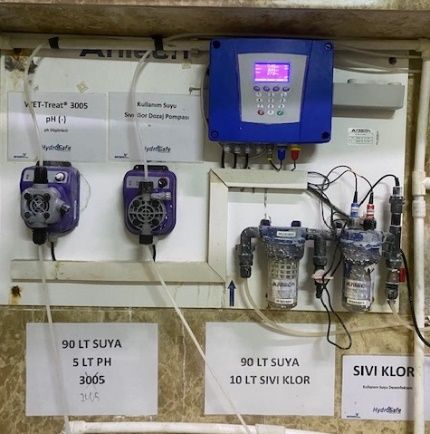
For hygiene in our pool, we use automatic dosing systems that use the minimum amount of chemicals.
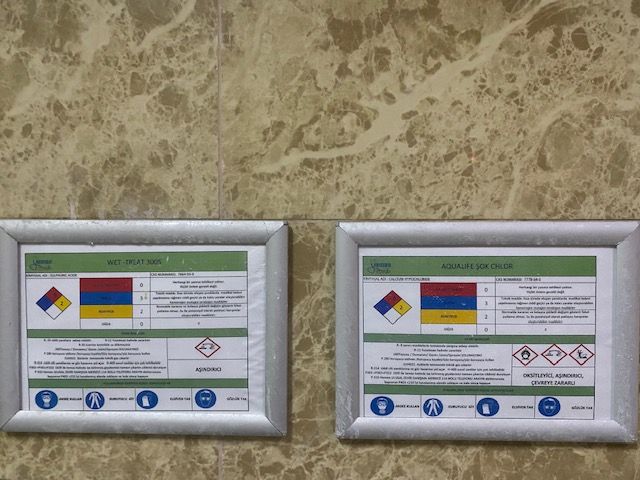
We make sure that the products used by our external pest control company do not harm human health or the environment. We try to make greater use of natural measures (fly traps, sticky paper, etc.).
Back to contentsPerformance Assessment and TargetsLink to this section
Note: The results in this section are the hotel’s own reported results; they have not been independently verified. The report was prepared before the end of 2026, so the 2026 comparisons do not cover the whole year (the electricity comparison, for example, covers the first 10 months).
2024–2025 Sustainability Performance Assessment and Target UpdatesLink to this section
Target
The 2024 targets included switching shampoo and shower gel from single-use to refillable products, reducing water consumption by 3%, reducing electricity consumption by 3%, achieving at least 45% participation in staff training, and supporting non-governmental organisations. Further targets were also planned: increasing the local purchasing rate by 50%, buying environmentally friendly products, reducing single-use plastic by 20%, increasing recycling by using kraft paper, raising customers’ sustainability awareness to 70%, keeping customer satisfaction at 90% and raising staff engagement to 50%.
Reported result
According to the checks carried out in 2025, single-use products were removed from all rooms and replaced with refillable products; water consumption fell by 14%; all facility lighting was converted to LED, but a 5% increase in electricity consumption was observed owing to guest occupancy rates; financial support was given to several non-governmental organisations; and staff training participation reached 52%, showing that the targets were largely achieved. In addition, the local purchasing target was achieved, the use of environmentally friendly products was partly completed, and awareness work to reduce single-use plastic was started. Recycling work with kraft paper is continuing, customers’ sustainability awareness was increased, and staff engagement reached a level close to the target (48%).
2025–2026 Targets and Actions ReportLink to this section
Planned
Editor’s note: This part of the report combines the 2025 and 2026 targets, planned actions and some steps that the source describes as completed.
The 2025 targets focused on sustainability, environmentally friendly practices, energy and water saving, staff development and social responsibility. In this context, positive discrimination policies were applied to increase the number of female employees, and it was planned to raise the proportion of female candidates in recruitment. To increase the use of environmentally friendly products, the aim was to switch to environmentally certified alternatives for the chemicals, guest toiletries, cleaning and office products used in the hotel. To save water and energy, the plan was to use water-saving taps, shower heads and water control equipment, and energy-efficient programmes in the laundries.
In waste management, single-use toiletries were removed and replaced with dispenser products, and the aim was to reduce the amount of waste by adding more recycling bins and supporting staff training. The plan was to raise awareness by increasing sustainability information in guest areas, and to reduce food waste by 10% through portion control and daily production planning. In addition, motivational events, reward systems and feedback mechanisms were strengthened to increase staff motivation and engagement.
The 2026 targets continue the work started in 2025 and focus particularly on a sustainable supply chain, support for the local economy and higher guest satisfaction. The proportion of ISO 14001-certified suppliers we work with will be increased, and existing suppliers will be informed about obtaining certification. Increasing local employment and supporting the sale of local entrepreneurs’ products in the hotel will strengthen social and economic sustainability. Financial rewards are planned to be given regularly following staff performance appraisals, and feedback will be collected and analysed systematically with the aim of increasing guest satisfaction by 2%.
Overall, the 2025–2026 targets address the environmental, social and economic dimensions of sustainability together, aiming both to minimise the hotel’s environmental impact and to support social and staff-focused development. A sustainable management approach has been adopted through actions such as saving water, improving energy efficiency, reducing single-use products and promoting gender equality.
Comparison of 2025 and 2026 TargetsLink to this section
Reported result
Under the 2026 sustainability targets, various activities were carried out in the areas of the environment, energy, water saving, human resources and social responsibility.
Female employment increased by 1%, local employment by 2%, and work with ISO 14001-certified suppliers by 10%.
To save water, aerators were fitted to all taps and staff were trained in water efficiency. Electricity consumption fell by 3.54% compared with the first 10 months of 2025, a saving of 44,332 units.
Editor’s note: The source does not state the unit of this saving.
In waste management, food waste fell by 10%, waste oil by 10%, metal packaging waste by 2% and waste batteries by 2%. Double-sided printing saved 15% in paper consumption.
For guest satisfaction, the Google review score rose from 3.6 to 3.8, an increase of 5.56%. Recycling practices were also improved, and PET, glass and metal waste is sent for recycling regularly.
To increase employee motivation, a New Year event was held and gifts were given to all staff. Public transport information was provided to raise guests’ awareness of sustainable transport.
Ongoing
Work to make environmentally certified products more widespread, to make use of organic waste and to support local entrepreneurs is ongoing.
Overall, significant improvements were made in 2026 in line with the sustainability targets, and practices to reduce resource consumption and waste were successfully continued.
Back to contents